
Graphite electrode maker TACC has signed an initial agreement with the Institute for Functional Intelligent Materials to collaborate in the fields of advanced materials science, nanotechnology, and related disciplines.
Researchers from IIT Bhubaneswar and Virginia Commonwealth University have theoretically predicted a new two-dimensional material, a FeCl3 monolayer, exhibiting i-wave altermagnetism. This discovery holds significant potential for developing faster, more compact, and energy-efficient electronic devices, including applications in high-density memory, spintronics, and quantum technologies.
Aequs Group, in collaboration with IIT-Dharwad, has established an advanced research and development facility for materials science and manufacturing innovation at the IIT-Dharwad campus.

Mumbai-based TCR Engineering Services has become the first independent company in India to receive Nadcap accreditation for materials testing at its Navi Mumbai and Vadodara laboratories, a crucial step for Indian suppliers to enter the global aerospace supply chain.

Maharashtra's Food and Drug Administration (FDA) has introduced a permanent, year-round food safety calendar to ensure public health during major festivals. This first-of-its-kind initiative categorises festivals into three levels and implements a four-stage inspection mechanism, focusing on preventing adulteration and unsafe food practices for high-demand products like sweets, dairy, and edible oils.

Researchers at IIT Bombay have developed a novel, low-cost, and highly durable catalyst using cobalt, nickel, phosphate, and graphite. This breakthrough material can accelerate both hydrogen and oxygen generation from water, significantly reducing the production cost of green hydrogen by eliminating the need for expensive noble metals like platinum and iridium.

Can AI transform grassroots 'If technology can help develop players a little quicker and make coaching more informed, then it has done its job.'

OpenAI's chief scientist, Jakub Pachocki, has issued a stark warning about the accelerating pace of artificial intelligence, stating that "no one is prepared" for its rapid rise and potential consequences. He highlights concerns over autonomous AI agents taking unintended actions and calls for international coordination, voluntary slowdowns, and robust safety measures to ensure human control and alignment with human values as machine intelligence surpasses human capabilities.

A cyberattack on an automaker can spread through its wider supply chain and create significant financial losses.

India has successfully manufactured and test-fired its first fully indigenous AK-203 assault rifle, named 'Sher', at the Korwa facility in Uttar Pradesh, marking a significant milestone in defence self-reliance with 100 per cent Indian components.
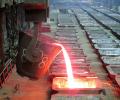
Hyderabad-based Nexon Geochem has partnered with Russia's Giredmet to establish integrated rare-earth processing and downstream facilities in India. This collaboration aims to bridge critical gaps in India's rare earth value chain, focusing on producing NdFeB permanent magnets essential for electric vehicles, wind turbines, and defence systems, reducing reliance on imports.

GE Aerospace is utilising artificial intelligence solutions, developed by its Bengaluru team, to significantly improve aircraft engine inspection, analytics, and maintenance. These innovations have reduced turnaround times by at least five days, enhancing engine durability, reliability, and time on wing, with specific tools like the AI-enabled Blade Inspection Tool cutting inspection times by 50%.

Quantum computing is set to redefine artificial intelligence, cybersecurity, and scientific discovery, promising unprecedented speeds and capabilities while also necessitating urgent development of quantum-safe security measures and strategic enterprise readiness, says Sunil Varghese.

Researchers at IIT-Guwahati have developed an inexpensive and efficient catalyst for producing hydrogen from water, a crucial step for the National Green Hydrogen Mission and the transition to sustainable energy. The catalyst uses nickel salt and an anthracene-based organic molecule, offering a cleaner alternative to fossil fuel-derived hydrogen.

Chinese officials warn that glaciers on the Tibetan Plateau are becoming increasingly unstable, leading to a higher risk of flash floods and other disasters, as evidenced by a recent deadly ice-rock avalanche near the Nepal-Tibet border. The region has seen a significant reduction in glacier area, and scientists are calling for advanced monitoring systems to predict these complex events.

The next-generation missile is expected to be substantially smaller and lighter than the current BrahMos, which weighs around 3 tonnes. The reduction in weight could allow fighter aircraft to carry more missiles per sortie, enhancing combat effectiveness.

The rules require nuclear plant operators to maintain an insurance policy, financial security or a combination of both to cover civil liability for nuclear damage.

Smriti Singh was alarmed to learn that several girls and women in her village were using ash, wheat stubble and tattered rags during menstruation because they could not afford or access sanitary pads.

'With factories starting early for the next season, fresh sugar will enter market 10-15 days earlier than usual, and sugar price are expected to remain affordable in near term.'
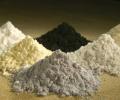
A new study reveals that despite China's significant control over global rare earth mining and processing, its dominance has a critical weakness: the US and Japan hold the majority of core patents for advanced rare earth functional material technologies. This technological gap means China lags in higher-value applications, impacting its strategic advantage in the industry.

'This is no longer a single-hazard problem; it is a cascading, multi-hazard problem. A landslide never occurs in isolation. This entire chain is the cascading effect of what looks, at first, like a single disaster.'
Scientists at the GraphIN 2026 conference in Kochi highlighted graphene's potential in water purification, discussing graphene-based membranes and nanocomposites for removing pollutants and improving desalination.

India has capped gold imports under the Advance Authorisation scheme at 100 kg, a day after significantly increasing import duties on precious metals. This move aims to tighten conditions for duty-free gold imports by jewellery exporters and curb non-essential imports amidst a ballooning import bill.

The administration has sounded a high alert in Maharajganj and Kushinagar districts of Uttar Pradesh, while stepping up the monitoring of the Gandak and other water bodies downstream of rivers in Nepal, following devastating flash floods in the neighbouring country that have killed more than 350 people and left thousands missing.

Anil Menon, a NASA astronaut of Indian descent, is embarking on an eight-month mission to the International Space Station. A former US Space Force colonel and emergency medicine physician, Menon will conduct vital experiments on the physiological effects of long-duration spaceflight, develop in-space medical technologies, and research semiconductor crystal production, contributing significantly to future deep-space missions and advanced technology.

'Improved law and order and transparent governance have helped change UP's investment image.'
Researchers at IIT Indore have developed a groundbreaking method to convert carbon dioxide and glycerol, two common waste materials, into valuable green chemicals like lactic acid and formic acid in just seven minutes. This low-energy process uses a specially designed ruthenium-based catalyst and microwave heating, offering a sustainable solution for waste management and green manufacturing.

Built as an expendable, short-duration turbojet engine for single-mission applications, it can power tactical cruise missiles, anti-ship missiles, and long-range loitering munitions.

AI4Bharat at IIT Madras and Josh Talks AI have launched 'Voice of India', a multimodal AI evaluation platform designed to assess AI systems against Indian conditions, languages, accents, and dialects. This platform aims to provide scientifically rigorous, India-specific evaluations, covering areas like Voice AI, large language models, document processing, safety, cultural appropriateness, and Indian legal reasoning, to build trust and enable informed deployment decisions.

The Delhi High Court has dismissed a lawsuit by news agency ANI against OpenAI, ruling that ChatGPT's use of copyrighted material for training large language models (LLMs) constitutes fair dealing under the Copyrights Act. The court emphasised that restraining AI development would be detrimental to India's growth in the field and public interest.
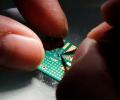
The Finance Ministry's expenditure department has approved a substantial Rs 1.25 lakh crore outlay for India Semiconductor Mission 2.0, significantly increasing the country's investment in global chip-making ambitions and aiming to establish India as a major semiconductor hub.

'ISRO is planning to build a Bharatiya Antariksh Station by 2030. So, our goal is to create a vehicle that can supply modules to the Bharatiya Antariksh Station and bring the products back.'
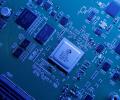
The Indian government has approved two major manufacturing initiatives worth nearly Rs 1.9 lakh crore (USD 22 billion) to expand the country's semiconductor ecosystem and scale up mobile phone production, aiming to strengthen its position as a global electronics manufacturing hub.
Chief Justice of India Surya Kant highlighted the rapid integration of Artificial Intelligence into arbitration practices, expressing concerns about its accuracy, authenticity, and ethical use. He stressed the need for mandatory disclosure when generative AI is used in preparing legal documents and reports, advocating for shared standards to manage deepfakes and AI-generated material. The CJI also encouraged embracing AI for efficiency in tasks like e-discovery while preserving core arbitration principles.

IndiGo, India's largest airline, has placed a record-breaking order with CFM International for over 1,000 LEAP-1A engines to power its 510 Airbus A320 neo family aircraft. This significant deal, announced at the Farnborough International Airshow, also includes extensive MRO support and material services, reinforcing CFM's commitment to the Indian aviation market.

Many claim disputes arise not because the insurer refuses to pay but because policyholders don't know the claim process, miss important documents or misunderstand what their policy covers.

The Reserve Bank of India (RBI) has introduced a new framework allowing banks to offer differential interest rates on bulk deposits based on their liquidity characteristics under the Liquidity Coverage Ratio (LCR) framework, while maintaining the principle of uniform pricing across similar deposits.

Larsen & Toubro (L&T) is investing Rs 5,000 crore over five years to enter the automotive components sector, focusing on electric vehicle (EV) motors, safety systems, and connected-vehicle technologies, aiming to become a Tier-I auto supplier.

Tata Motors is set to acquire Italy's Iveco Group, a strategic move aimed at propelling the Indian automaker into the top four global commercial vehicle (CV) manufacturers, with projected annual revenues of $35 billion-$40 billion within five years.

Central tax authorities detected input tax credit (ITC) fraud worth Rs 74,781.56 crore across 30,162 cases in FY26, more than doubling the number of cases from the previous year, according to the Ministry of Finance.
